
3.4 Determining breeding status
During the breeding season many birds develop a brood patch, which is an area of bare, featherless skin on the underbody, in preparation for incubation and brooding. A network of blood vessels in the skin of the brood patch raises the temperature locally, perfect for keeping the egg warm.
The examination of brood patch condition of seabirds is a useful technique for ascertaining breeding status and timing for species such as petrels and shearwaters40. Analysis of patterns of down loss from captured birds provides an indication of the timing of incubation, as down is lost over the brood patch just before incubation, and subsequent chick rearing, during which the brood patch is re-feathered. Birds that brood chicks for a while have longer-lasting brood patches than those than leave them alone a few days after hatching. For example, unlike passerines, petrels and shearwaters share incubation of a single egg, meaning brood patch status is an indicator of breeding condition in both male and female birds. By assessing temporal patterns of brood patch formation of captured birds can provide an indication of the likely breeding timetable for the species.
Brood patches can be scored to provide more information. An example of a scoring system for brood patch status is as follows:
0 – No down shed (or completely downy)
1 – Traces of down lost
2 – Half patch covered in down, half bare
3 – Traces of down remain (e.g., centre line, around edges)
4 – Patch free of down (vascularization should be noted if seen)
R – Re-feathering present, however, re-feathering could be scored as follows:
R3 – patch with a few developing feather shafts
R2 – patch with substantial coverage of burst shafts
R1- patch completely covered with regrowing down not yet full length.
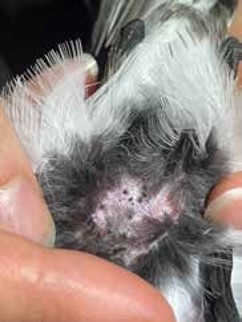
Figure 115. Bare brood patch on a New Zaland Storm-petrel, showing some refeathering. Photo: Edin Whitehead.
Note that while a brood patch is a good indicator of a breeding bird, in some seabird species nonbreeders may also develop a partial (or even full) brood patch. Bare brood patches are controlled by hormonal processes in breeding age birds and not by rubbing off down on an egg. They do define the incubation period in a species as most of the year the brood patch is covered in down.