
2.1.5 Playback
Probably not relevant for Palau at this point.
Seabirds can be very noisy at their breeding colonies, especially when gathered in high densities. Their calls are used for individual recognition and are typically emitted during social interactions. The majority of seabirds are very social, and these aural cues form a powerful attractant for a wide range of species. Calls from recordings made during acoustic surveys can be used for playback targeting particular species. The calls can be used for a variety of purposes, including finding birds nesting on the ground or in burrows, attracting flying birds to the ground for mark recapture surveys, tracking studies and other research projects such as genetics and diet studies, setting playback camera traps, and in seabird restoration projects using social attraction (see Section 4.4.2). Here we focus on the first three.
Seabird calls can be played through any device that broadcasts recordings, including mobile phones and MP3 players. However, the calls need to be loud enough to reach the birds you are trying to attract otherwise it won’t work. Portable Bluetooth speakers can help project the sound further. A longer lasting option are specialist game callers devised for hunting as they are robust, weather-proof devices that are excellent for use in the field. They can be loaded with a range of calls via USB. An example of this is the Foxpro game caller https://allpredatorcalls.com/foxpro-prowler-electronic-game-call/
Finding birds nesting on the ground or in burrows
Playback can be used to locate birds on the ground or in burrows as part of ground searches. Many petrels and shearwaters are very responsive to hearing their calls and will give away their presence by calling back, both during the day and at night. This is especially useful where birds are nesting deep in forests or under dense scrubby vegetation. Ground searches need to be quite localized and are best conducted to follow up on other types of surveys, such as acoustic surveys and reports from communities and others which can narrow down places where seabirds might be breeding. The method is straightforward, playing calls at regular intervals while moving through the area. Playing calls at night has the added advantage with nocturnal species (i.e., birds that return to their colonies at night after feeding at sea) by detecting them while on ground or circling above the forest before landing. An important note however, is that not all species respond to calls so just because you don’t get a response, doesn’t mean the birds aren’t there.
If you are working with a species that has an uncertain response rate, trial the call playback at known burrows that are occupied, at different times of the breeding season. Knowing what your ‘hit rate’ is from known, occupied burrows can be used as an adjustment factor in burrow surveys of unknown occupancy. Also some species reply by calling in flight or on the ground, and others may fly past but not vocalise. You may also need to try multiple different calls to get a bird to respond – use a mix of calls from an active colony and see which ones elicit the best responses. If you can identify the difference between sexes on your calls, then use a combination of both sexes to ensure that you are attracting both males and females.
Attracting flying birds to ground
When seabirds have been detected regularly overflying an area, and if the breeding location of a threatened or rare species of petrel or shearwater is unknown or suspected, then playback can be used to the bring birds to the ground, often in combination with spotlighting or flood lighting at night (see Section 2.1.11 Capture methods).
Remote playback camera traps
This method adopts a combination of playback player, speaker, trail camera, and solar panel to allow the system to run for long periods. The solar panel is optional and depends on the length of deployment. The layout of equipment, with trail camera in place, is shown in the figure below. A relatively clear space (stage) is left for the birds to land and approach the speaker.
This method has been used to detect the presence of a target species to extend the range of known breeding areas, or in places where it has not been detected before. The camera provides confirmation of the birds’ presence. The components are relatively lightweight except for the 12V battery and can be deployed in remote locations, on ridgelines, summits of peaks, or, if trying to detect flyways, at the entrances to valley systems, or on offshore islands. It does require an automated sound system that can be preset with playing times. The sound anchor system illustrated here was made by Aotearoa New Zealand’s Department of Conservation.
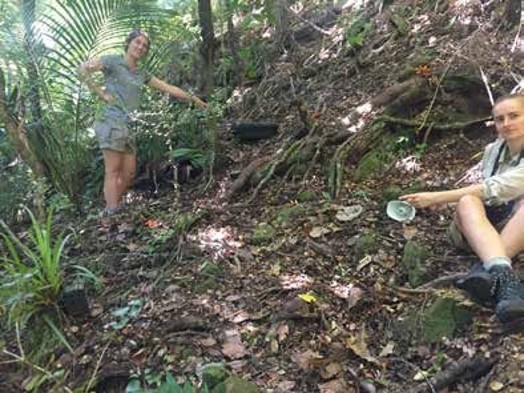
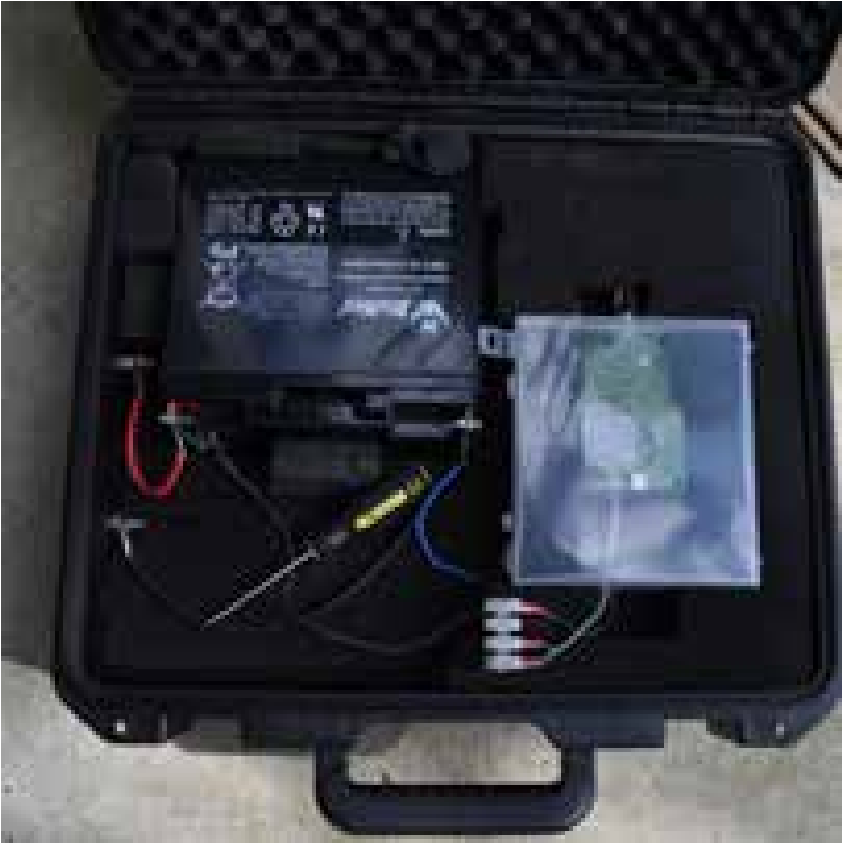
Figure 37. Components and layout of a playback camera trap. The camera will record any birds that land and their behaviour in response to the playback. Photos: Chris Gaskin
When to use
Knowing when the target species are breeding and the periods when they are most likely to be responsive to playback is critical. This information is obtained through acoustic surveys and prolonged deployment of acoustic sensors, and the subsequent analyses of the recordings. This can include peak periods across the breeding cycle and calling during day and night hours within those periods. Also be aware that this could make attracted birds vulnerable to predation and drawing birds down on the ground where they are more vulnerable. Consider the prevalence of introduced predators in your area before using this technique.