
2.1.1 Case study - A species lost, rediscovered, or waiting rediscovery?
In 1839, a distinctive streaked storm petrel was collected in Samoa by the naturalist T. R. Peale during the US Exploring Expedition (US Ex Ex). The specimen is held at the National Museum of Natural History, Smithsonian Institution, Washington DC. It was described as a new species Thalassidroma lineata (now Fregetta lineata).20
The original description of this bird includes artwork by Peale. Unfortunately, little was recorded by either of the naturalists of the expedition, other than the following journal entry by Peale: “This bird was frequently seen within the torrid zone, in the Pacific Ocean. A single specimen was obtained at the Island of Upolu, from a native, who represented to us that during the breeding season this species lives in holes, very high up in the mountains.” The three expedition vessels were at the Samoa Islands from 8 October to 10 November 1839. Some of that time was spent in American Samoa (Tutuila), with the remainder in Samoa (Western Samoa) visiting both the main islands, Upolu and Savaii, and two of the smaller offshore islands, Manono and Apolima. Where exactly the bird was presented to Peale is not known; however it does appear to have been captured on land. The naturalists and survey parties did visit the island’s interior and cross Upolu as well as climbing some of the high points, however the bird could equally have been presented at a village on the coast.
Since that time, five other ‘streaked’ storm petrel specimens were collected in the Pacific, one in the Marquesas in 1922, three in Aotearoa New Zealand (two in 1829, one in 1895). More recently, sightings of streaked storm petrels at sea have led to the confirmation that the three storm petrels from Aotearoa are the New Zealand Storm-petrel (Fregetta maoriana) which have been discovered breeding on Te Hauturu-o-Toi (Little Barrier Island), only 50kms from Auckland.
Furthermore, streaked storm petrels have been seen in recent years off New Caledonia and Australia, dubbed the ‘New Caledonian Storm-petrel’ or ‘Coral Sea Storm-petrel’, and a recent paper argues that these birds, along with the specimens from Samoa and Marquesas should be treated as the same species – Fregetta lineata.11 However, although the reasoning is supported by high quality photographs, comparing birds at sea to the museum specimens, remains speculative. Genetic confirmation is required to determine the taxonomic status of this enigmatic group of small seabirds.
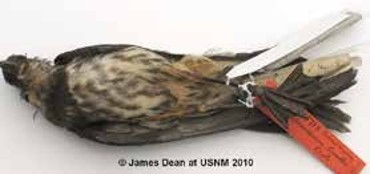
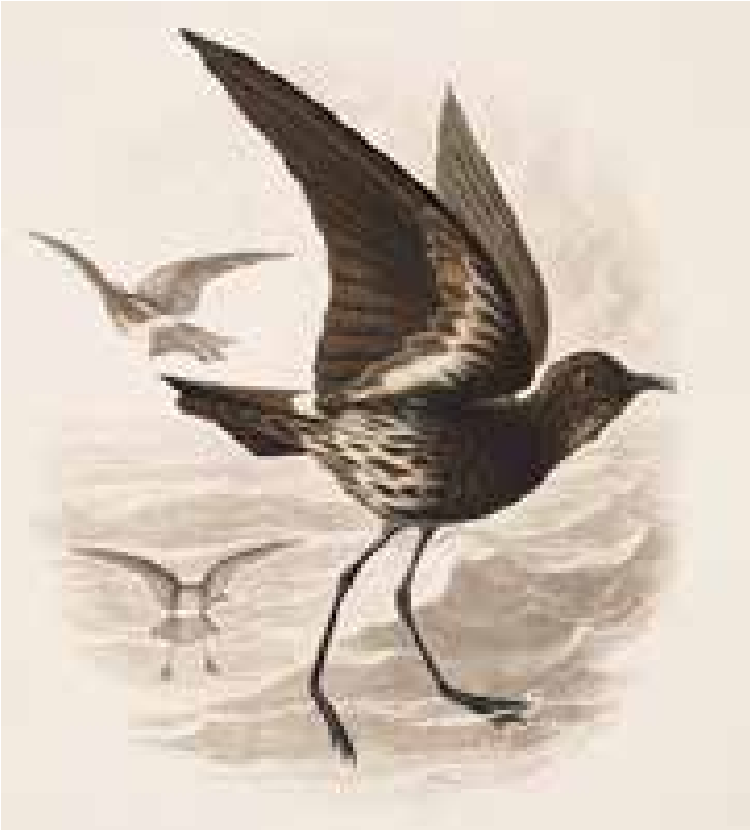
Figure 30. The only specimen of Fregetta lineata is from Upolu, Samoa. Photo: National Museum of Natural History,
Smithsonian Institution, Washington DC, United States of America. Art by T.R. Peale.20