
3.2 Handling birds
Not advised for Palau at this point unless people are already experienced.
Seabirds should only be handled by people who have been properly trained.
In the section below, we outline several ways in which birds can be handled for research or management actions. For capture methods, see the previous section where we discuss options for different species and situations. Handling birds should never be taken lightly, as it inevitably causes stress to the bird and in the worst case could even cause an injury. It should never be undertaken by someone who has not been trained, as this could result in injury to either the bird or the handler. Training should involve the correct capture and handling techniques specific to the species in question, as there are many differences between handling say a storm-petrel and a shearwater, or a petrel and a booby. Therefore, before considering capturing seabirds, assess whether it really is necessary to achieve your goals; it may be that you don’t need to handle the birds at all.
If you decide that bird capture is a vital component of your work, then there are several things to consider.
- Time of day – In tropical environments in particular it is best to capture and handle birds at night or during the morning or late afternoon, when temperatures are not so hot. Heat stress is a serious issue for birds and handling them (especially extended handling for tagging work) could cause the bird to overheat. Conversely, during the chick rearing period if you handle an adult bird returning with food for its young, you may inadvertently cause regurgitation thus denying the chick its meal at a critical growth period.
- Time of season – During the breeding season, birds are particularly vulnerable to handling immediately prior to egg laying and during incubation. If you handle birds just prior to egg laying, some species may even lay their egg in the weighing bag due to stress. During incubation, you may cause abandonment of the egg.
- Species-specific considerations – Some species are more robust than others, or more tolerant of handling. Furthermore, some species may be more prone to wing or leg strain. Consult the literature and experts in the field to see whether they have any pointers or warnings about your study species.
- Contamination on your hands – make sure you do not have anything on your hands that could contaminate the bird and potential compromise its waterproofing, such as sunscreen, oils from a previously handled bird which regurgitated, etc. Clean your hands thoroughly before handling a bird.
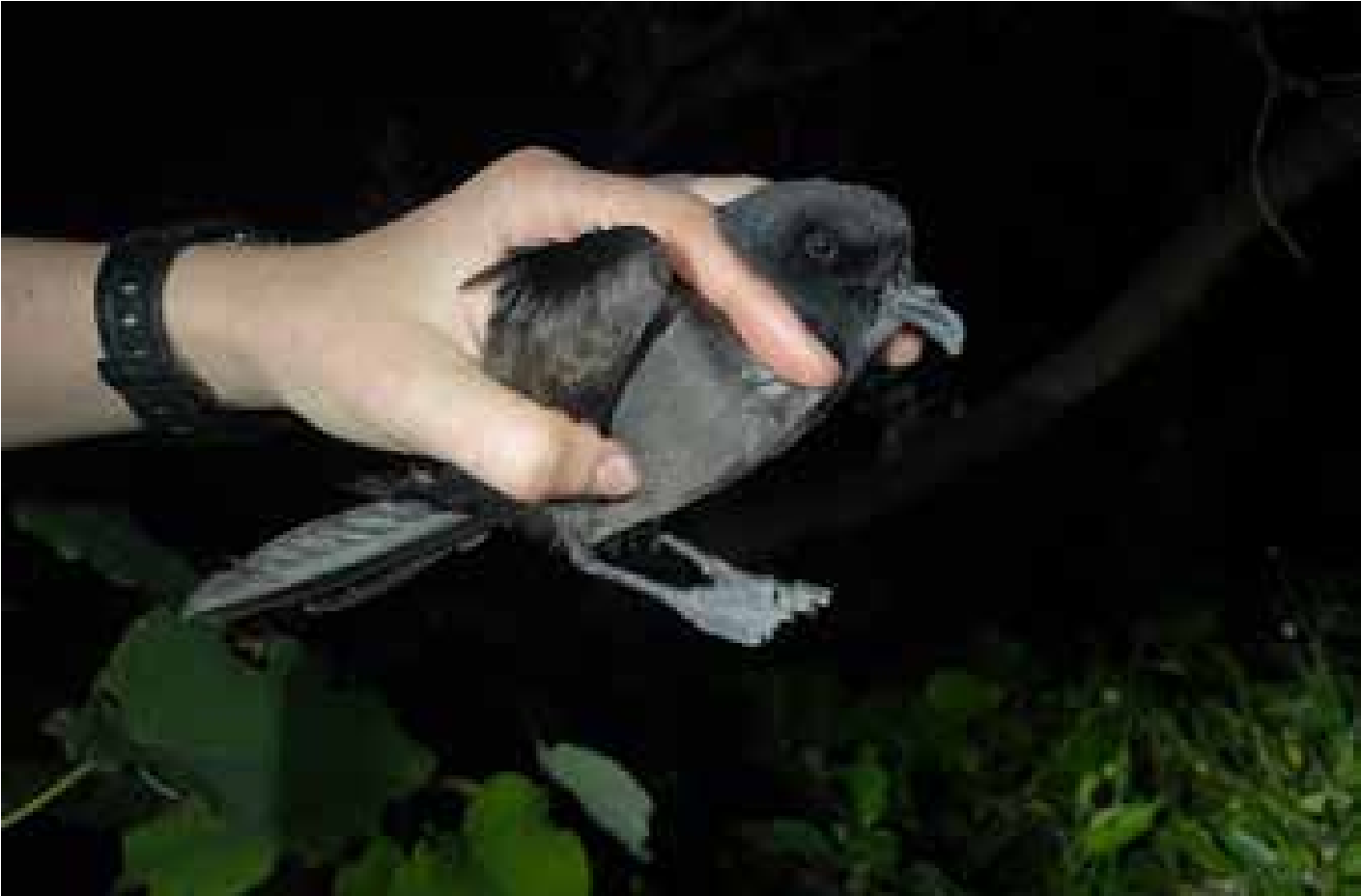
Figure 105. Holding a small seabird, a storm-petrel, Rangitāhua/Kermadec Islands. Photo: Chris Gaskin.
With all the above incorporated into your research planning, and the bird now in hand, it’s also important to understand how to properly handle it. Some species are docile in the hand while others are notoriously feisty (as anyone who has handled a Wedge-tailed Shearwater can tell you!). Appropriate handling techniques will minimise stress, help calm the birds and – critically - mitigate against the risk of injury both to the bird and the handler(s). In all cases, it is important to immobilize the bird as quickly as possible, keeping the wings against the sides of the body – wildly flapping wings are a common cause of injury for the bird. Likewise, make sure the bird’s head is not darting about. Remember the beak is a formidable weapon and seabirds have extremely fast reflexes. Keep your eyes well away from the business end of the bird, or any other tender parts of the body. Be aware that their claws can be very sharp. Wearing safety glasses or prescription glasses will protect the eyes.
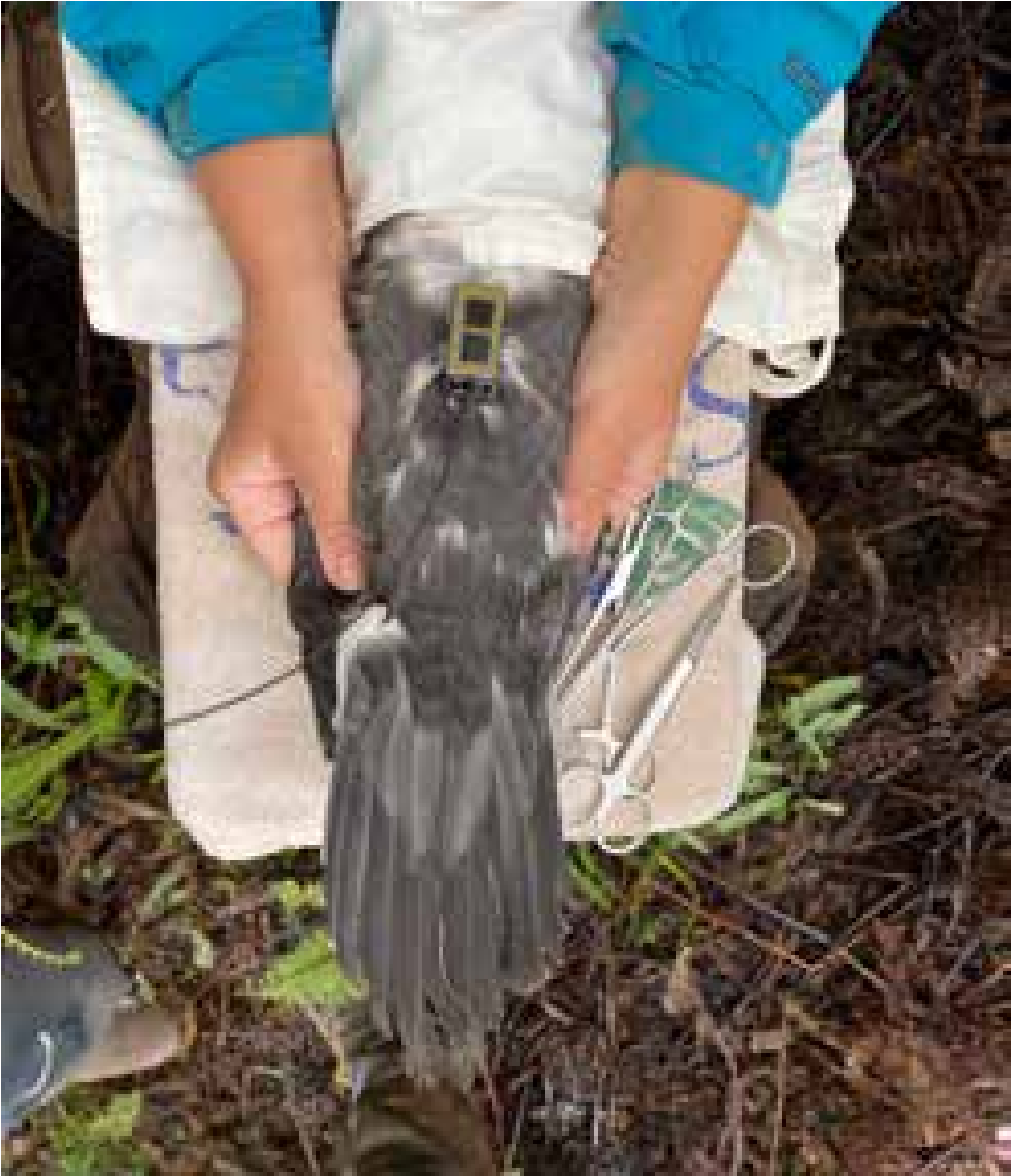
Figure 105. Holding a small seabird, a storm-petrel, Rangitāhua/Kermadec Islands. Photo: Chris Gaskin.
If the bird does manage to bite you with its beak, don’t jerk away as this can cause the beak to further tear open your flesh and can damage the bird’s beak as well. Have a second person gently open the beak and then remove the bitten body part. Understanding how tightly to hold a bird is also important; too tight and you could hurt the bird, too loose and the bird could get a wing (or even body) free. For the novice, this is a steep learning curve, so make sure you train with an experienced bird handler until you are confident that you can do it on your own.
As a side note, you may not even be intending to handle birds in your project but may find you have to if you find an injured bird at your management site, or a fledgling seabird that has been grounded by fallout. These handling techniques are therefore useful skills to learn regardless so you are ready to deal with unexpected incidents.
Once captured, smaller seabirds (storm-petrels, shearwaters, petrels) can also be put in bird bags (for weighing) or boxes (to calm them down, or while you are removing additional birds from a mist net, for example). Bird bags can be made specially with a draw chord at the opening, or alternatively an easy option is to use pillowcases. When using bird bags, make sure the bag is big enough for the species you are working with, that it is made from a light enough fabric that it is not too hot, and do not leave the bird in the bag for an extended period (really it should just be used to weigh the bird and then extract the bird for whatever else you need to do). If it has a draw string, make sure that does not inadvertently get wrapped around a leg, and make sure there are not loose bits of thread that could do the same. Bring multiple bags with you; best practice is to not reuse a bag on a new bird as you can transfer disease or parasites between individuals. Bags need to be thoroughly washed following use.
Bird boxes should be big enough for the species you are working with. It is not good practice to put multiple birds in a box (unless there is a divider that keeps them fully separated), as in their panic they could injure each other. Boxes should have sufficient air holes and be placed in shade where they will not overheat.
Some projects use tubes or wraps to restrain birds. The aim of these devices is to keep the wings tight against the birds body and immobilise it, thus preventing injury. With your bird now looking like a burrito, you can more easily take certain measurements (particularly head measurements).
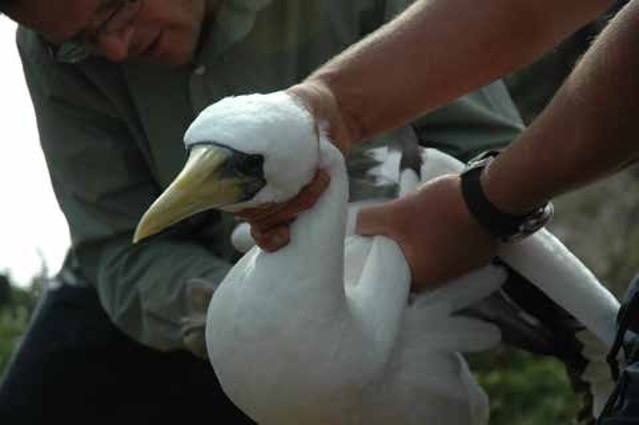
Figure 107. Holding a Masked Booby for banding, measuring and sampling. Photo: Karen Baird.
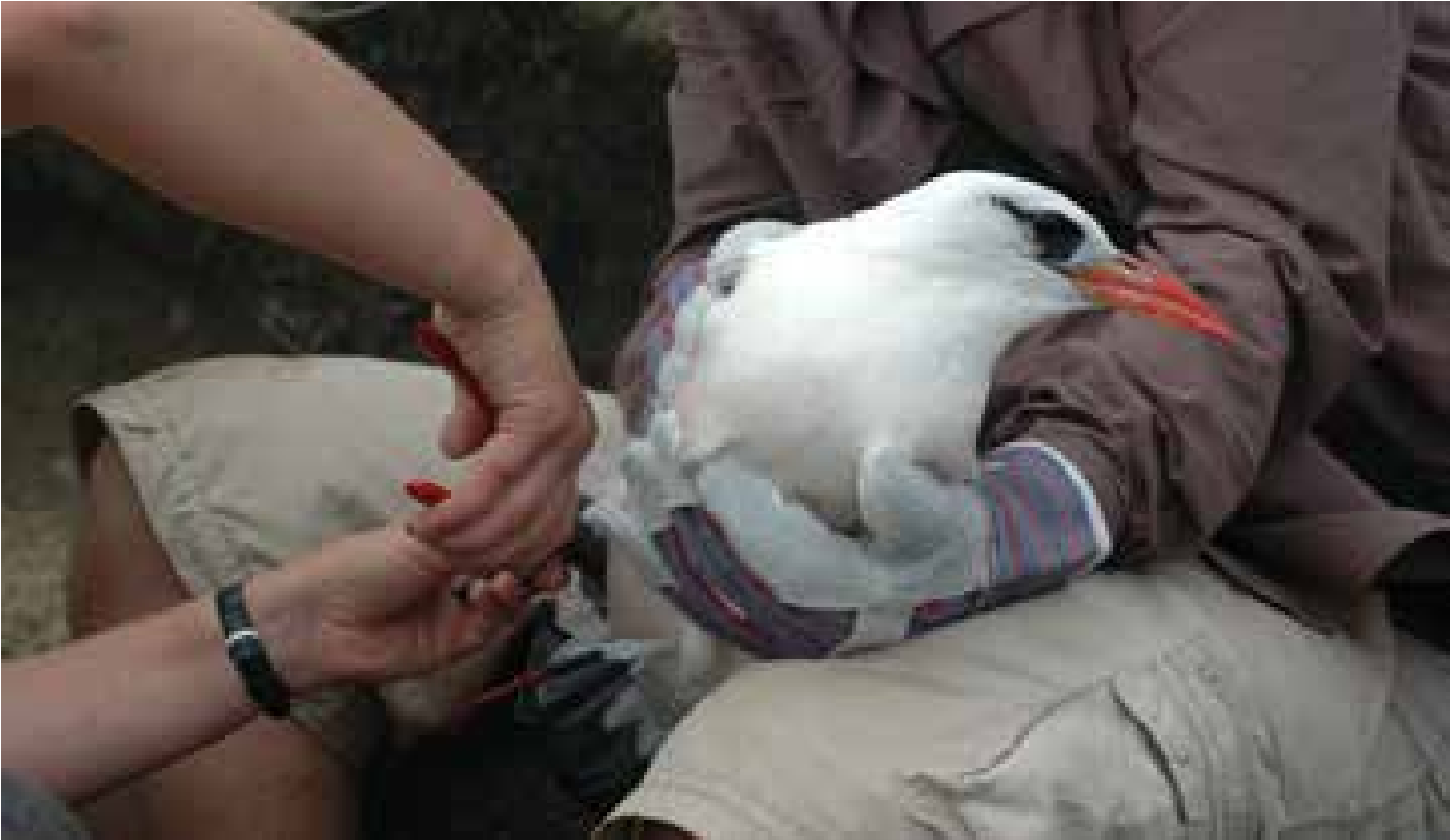
Figure 108. Restraining a Red-tailed Tropicbird for banding, measuring and sampling. Photo: Chris Gaskin.
Lastly, in the case of larger birds (such as boobies and albatrosses) remember these birds are big and strong. The same rules for immobilising the bird as outlined above hold true for these larger species. Keep the wings against the bird’s body, don’t hold it too tightly or too loosely, keep an eye out for heat stress, and keep that beak away from your face. With these larger birds you need two people on the team: one restraining the bird and the other banding. Indeed, as a rule of thumb handling and restraining is best done with multiple people.