
• Skip to navigation
  • Skip to content
Palau seabirds
  • Welcome
  • Foreword
  • Executive summary
  • Part 1: Oceania seabirds
    • 1.1 Seabirds
      • 1.1.1 Seabird ecology
    • 1.2 Why survey and monitor seabirds?
    • 1.3 Seabird-driven ecosystems
      • 1.3.1 Seabirds and nearshore ecosystems
      • 1.3.1 Case study - Palmyra Atoll, Northern Line Islands (US)
    • 1.4 Seabirds of Oceania
      • 1.4.1 Species status in Oceania
      • 1.4.2 Additional species found in Oceania
      • 1.4.3 Terrestrial habitats - Breeding and roosting locations
    • Seabirds of Palau
      • Identifying Palau's seabirds
      • Palau's seabird colonies
    • 1.5 Traditional knowledge and customs
    • 1.6 Threats
      • 1.6.1 Terrestrial
      • 1.6.2 Marine
    • 1.7 Key steps in developing a survey and monitoring programme
    • 1.8 Working with Oceania communities
      • 1.8 Case study - Rapa, seabird restoration and the community
      • 1.8.1 Training and capacity-building
      • 1.8.1 Case study - Community engagement in Vanuatu Petrel research
  • Part 2: Survey tools & types
    • 2.1 Survey tools
      • 2.1.1 Historical data
      • 2.1.1 Case study - A species lost, rediscovered, or waiting rediscovery?
      • 2.1.2 Community surveys
      • 2.1.3 Acoustic surveys
      • 2.1.4 Acoustic sensors
      • 2.1.4 Case study - Conservation challenges of monitoring seabird collisions with human infrastructure
      • 2.1.5 Playback
      • 2.1.6 Camera monitoring
      • 2.1.7 Thermal imaging
      • 2.1.8 Radar
      • 2.1.9 Ground counts
      • 2.1.10 Dog searches
      • 2.1.11 Capture methods
      • 2.1.12 Bird-borne tracking
      • 2.1.12 Case study - Use of VHF telemetry to discover breeding sites of New Zealand Storm petrel
      • 2.1.12 Case study - Using tracking technology to locate endangered ‘ua’u (Hawaiian Petrel) burrows
      • 2.1.12 Case study - Gaining invaluable insights into the foraging behavior through tracking
      • 2.1.12 Case study - Migration and non-breeding habitat of Beck’s Petrel (PTT)
      • 2.1.12 Case study - Monitoring surface-nesting behaviour of Kermadec Petrels
    • 2.2 Survey types
      • 2.2.1 Rapid assessment / reconnaissance
      • 2.2.2 Threat assessment
      • 2.2.3 Vegetation communities
      • 2.2.4 Colony surveying
      • 2.2.4 Case study - Tītī / Cook’s petrel, Hauturu, Aotearoa New Zealand
      • 2.2.4 Case study - Rako / Buller’s Shearwater, Poor Knights Islands, Aotearoa New Zealand
      • 2.2.5 Whole-island biodiversity surveying
      • 2.2.6 eDNA surveying
      • 2.2.7 Drone surveying
      • 2.2.8 Shore-based sea-watches
      • 2.2.8 Case study - Beck’s Petrel, Silur Bay, southern New Ireland, Papua New Guinea
      • 2.2.9 At-sea surveys
      • 2.2.10 Aerial at-sea surveys
      • 2.2.10 Case study - Who lives in the open sea?
      • 2.2.11 Shoreline and opportunistic surveying
      • 2.2.12 Finding breeding sites
  • Part 3: Measurement metrics & monitoring
    • 3.1 Nest monitoring
    • 3.2 Handling birds
      • 3.2.1 Reasons for handling birds
    • 3.3 Sampling from seabirds
    • 3.4 Determining breeding status
    • 3.5 Mark-recapture studies
    • 3.6 Reproductive success
    • 3.7 Diet studies
    • 3.8 Monitoring stress
    • 3.9 Measuring plastics accumulation
    • 3.10 Contaminants in seabirds
    • 3.11 Seabird-transported nutrient monitoring
    • 3.11 Case study - The effectiveness of predator control
    • 3.12 Monitoring cyclone impacts
    • 3.13 Monitoring pest control measures
  • Part 4: Managing data to support conservation
    • 4.1 Guidelines for data management
      • 4.1.1 Managing your own data
      • 4.1.2 Survey databases
    • 4.2 Pacific seabird colony database
    • 4.3 Better marine conservation
    • 4.4 Seabird restoration projects summary
      • 4.4.1 Passive restoration
      • 4.4.2 Active restoration
      • 4.4.3 Seabird restoration database
  • Part 5: Resources
    • 5.1 Using this manual
    • 5.2 Pacific Seabird Advisory Group
    • 5.3 Seabird identification keys
    • 5.4 Bird banding schemes
      • 5.4.1 National bird banding schemes
    • 5.5 Important resources
  • Palau workshop resources
  • Acknowledgements
    • References
Palau seabird monitoring
You are here: Welcome» Part 5: Resources

Part 5: Resources

Sections in Part 5

5.1 Using this manual

5.2 Pacific seabird advisory group (PSAG)

5.3 Seabird identification keys

5.4 Bird banding schemes

5.5 Important resources

Shortcut to important resources

SPREP Seabird Action Plan 2022-2026
Pacific seabirds database

Birds of Palau on iNaturalist

Birds of Palau on eBird

PART FIVE

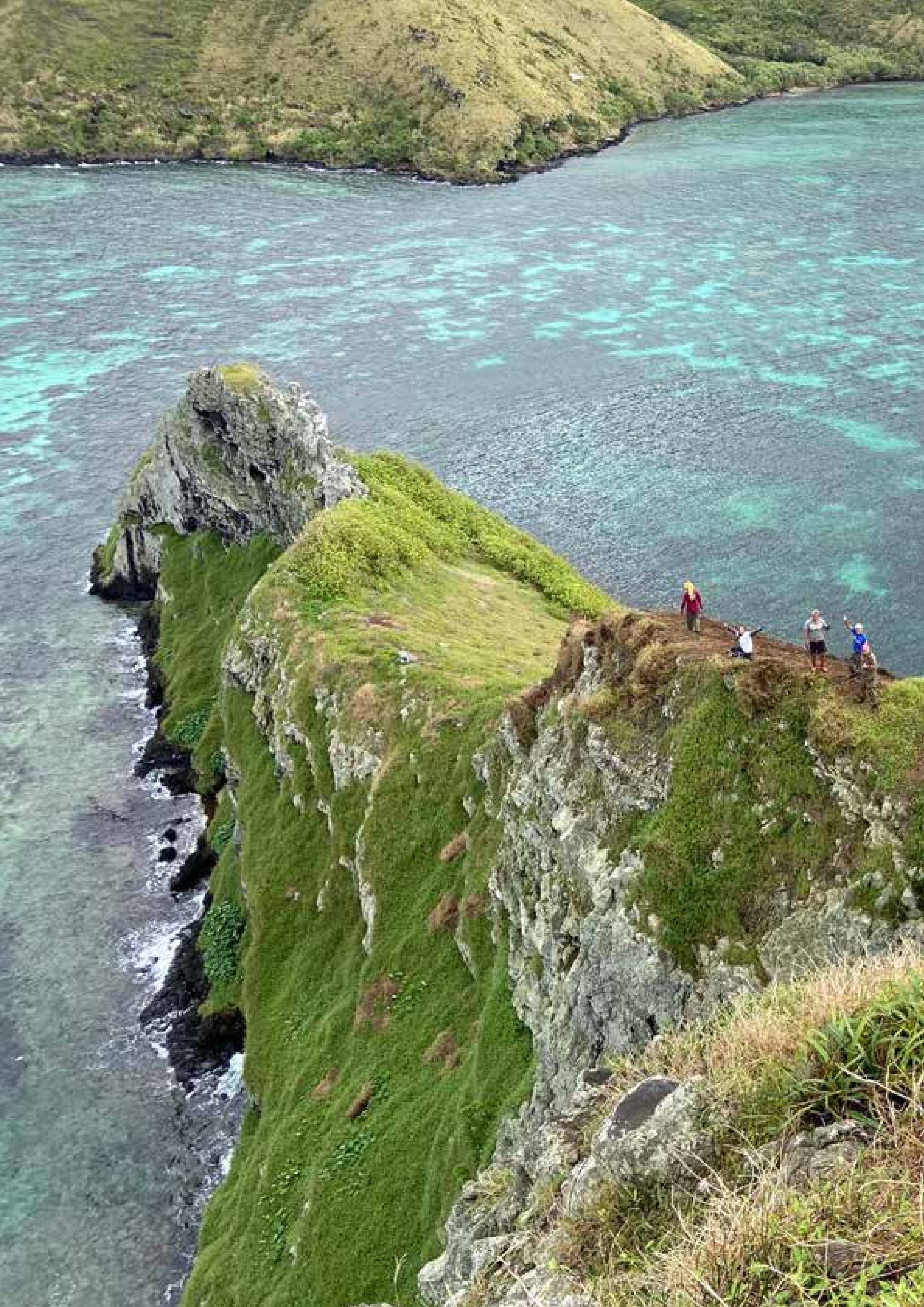
Restoration team on Tarakoi, Rapa, French Polynesia. Photo: Tehani Withers, SOP Manu.

Previous page: 4.4.3 Seabird restoration database Next page: 5.1 Using this manual

© Copyright 2026 - 2026 - SPREP
This site is powered by CMS Made Simple version 2.2.22