
1.3 Seabird-driven ecosystems
The spectacle of seabirds massing over large and thriving colonies such as Kiritimati and Rawaki (Kiribati), Chesterfield Reefs (New Caledonia), Marotiri (French Polynesia), and Oeno and Henderson Islands (Pitcairn islands) can be staggering. Such a spectacle allow us to appreciate why some islands, especially those that are truly oceanic and where seabirds dominate their ecology, can best be regarded as ‘seabird islands’.
The word guano, derived from the Inca of South America, means a gift of the gods. In this case, the gift is actually dried seabird droppings, which is of course produced naturally in huge quantities on seabird islands. It has long been utilised by people – for example, guano mined from Nauru was used extensively in New Zealand and Australian agriculture prior to the development of synthetic fertilisers and use of rock phosphate. Perhaps the most visible examples are seen as pungent deposits around surface or tree nesting seabirds, such as at booby and tern colonies or beneath noddy roosts. While these examples are easy to see, the far more widespread examples are hidden within colonies of burrowing seabirds such as petrels and shearwaters. Here the guano is incorporated directly into the soil as the birds return at night, clean their burrows and throw freshly minted compost complete with fertiliser across the forest floor as they dig.
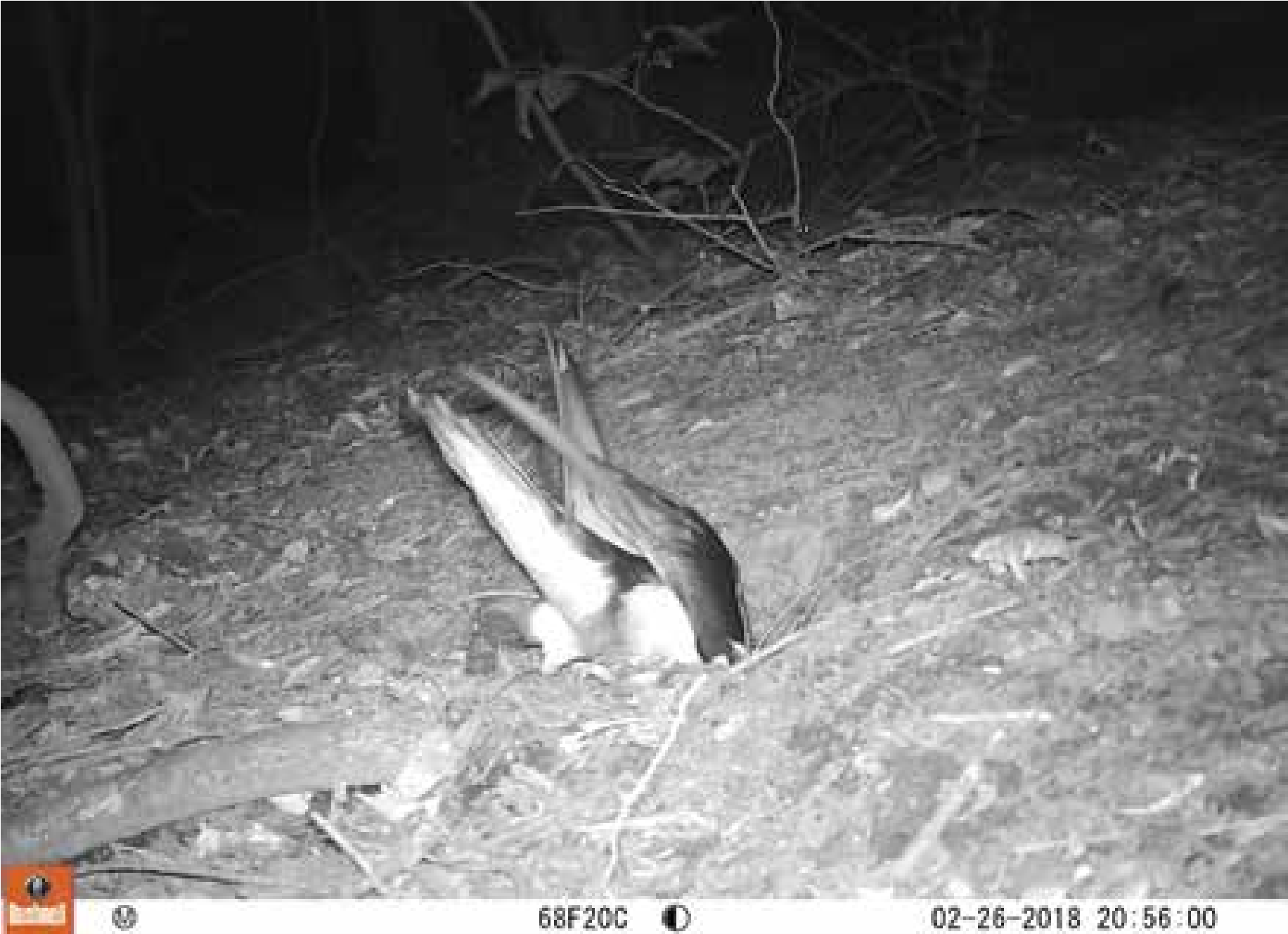
Figure 10. Rako Buller’s Shearwater digging a burrow, Poor Knights Islands, Aotearoa New Zealand. Photo: Trail camera NNZST
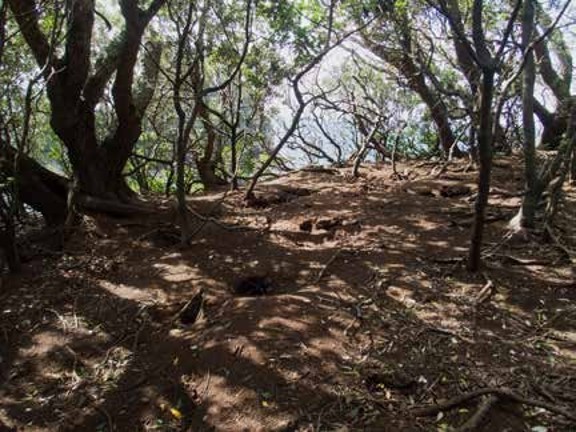
Figure 11: Petrel burrows on Korapuki Island, Aotearoa New Zealand. Photo: Edin Whitehead
Because most seabirds – whether burrowing or not – live in colonies, the localised production of guano can be staggering. Seabird colonies have been estimated to spread up to 100 times more nitrogen and 400 times more phosphorus than is normally applied to agricultural land. On forested islands, the burrowing activities and guano production by seabirds have such profound effects that the birds are often referred to as ecosystem engineers or ecosystem drivers. None of this material is derived from terrestrial sources, as seabirds only feed at sea. The guano is produced from resources gained in oceans and deposited on land, bridging two vastly different ecosystems.
Most likely, many smaller islands within the region were once dominated by enormous numbers of burrowing seabirds. The few islands untouched by introduced predators, and those now recovering after predator removal, provide indications of the interactions within these extraordinary ecosystems. Multidisciplinary studies conducted on many of the islands have demonstrated that the presence of seabirds drives almost every level of ecosystem functioning, including litter decomposition rates and invertebrate abundance and community composition. The nutrient-rich and heavily burrowed soils also promote communities of plants able to withstand disturbance, acidic soils, high nutrient loads and dry conditions. The plants need to be long-lived, able to sprout from the base to overcome the effects of toppling in the loose soils, and able to produce prolific seeds to take advantage of light gaps. Plants living in this environment also need to compensate for very high seedling mortality as the seabirds rip up anything they can find to line their burrow nests.4
Seabirds that breed in one place but come ashore to roost in other places can also carry plant seeds from one island to another, thus spreading plant species across island chains and contributing to the botanical diversity of different islands. Indeed, seabirds are one of the ways in which plant species colonise newly formed islands. This can even take a gruesome turn – in the case of the sticky seeds of the Pisonia (or “bird-catcher”) tree (found in the Caribbean and Indo-Pacific) the seed load on some birds roosting or nesting on the branches of the tree can be so heavy or sticky that the bird may eventually be unable to fly and will perish. Remarkably however, on some islands Black Noddies (Anous minutus) choose to nest in Pisonia trees!
As a result of seabird activity, invertebrates may also face a shortage of leaf litter in which to shelter, except at the foot of slopes. Here litter and rich friable soil accumulates from seabird “gardening” and enormous numbers of invertebrates take advantage of the favourable conditions. Comparisons between islands with and without seabirds have demonstrated the advantages to invertebrates if they can find the right conditions. In places, bright crusts of algae, lichens and mosses on hard surfaces such as tree-trunks and boulders provide evidence of the effects of seabird droppings. At night, these surfaces and seabird carcasses are grazed by beetles, which in turn are food for other fauna, including reptiles if present. This unique combination of the high diversity of nesting seabirds and other fauna provides another reason for the international significance of the islands in the region.
Not all of the nutrients brought to land by seabirds remain there, and some wash off into the coastal oceans. Transport of nutrients from large colonies of seabirds to the nearshore marine environment has been shown to enhance coral reef capacity to accrete with rising sea levels and increase marine productivity for example increasing fish biomass in the adjacent coral reef by 48%.5
This enhanced coral reef productivity is a measure of ecosystem resilience. Rebuilding coastal seabird colonies through predator control or other mitigation methods would provide increased marine resilience and support local livelihoods through fishing.