
1.5 Traditional knowledge and customs
[Suggest this is excluded from the workshop as people in Palau won't appreciate sharing examples from elsewhere. We may be able to include local stories for from partners, but these are probably considered private to Palauans.]
Seabirds have long played an important role in the culture of communities living in proximity to them.
They are found in folklore, totemism, dance and art, as well as providing a subsistence resource for many Pacific peoples. Seabirds played a critical role in the settlement and navigation of the Pacific, including the long-distance voyages that in part utilised seabirds to help guide their paths. Some seafaring peoples used seabirds that they knew would be heading to land to roost at night, such as noddies and white terns, to indicate when they were close to land. Seabird behaviour continues to assist people in finding fish at sea (tuna birds) and provide information on oceanic weather patterns. Annual harvesting of chicks, eggs and in some case adults is also an important traditional activity for several Pacific cultures and communities.
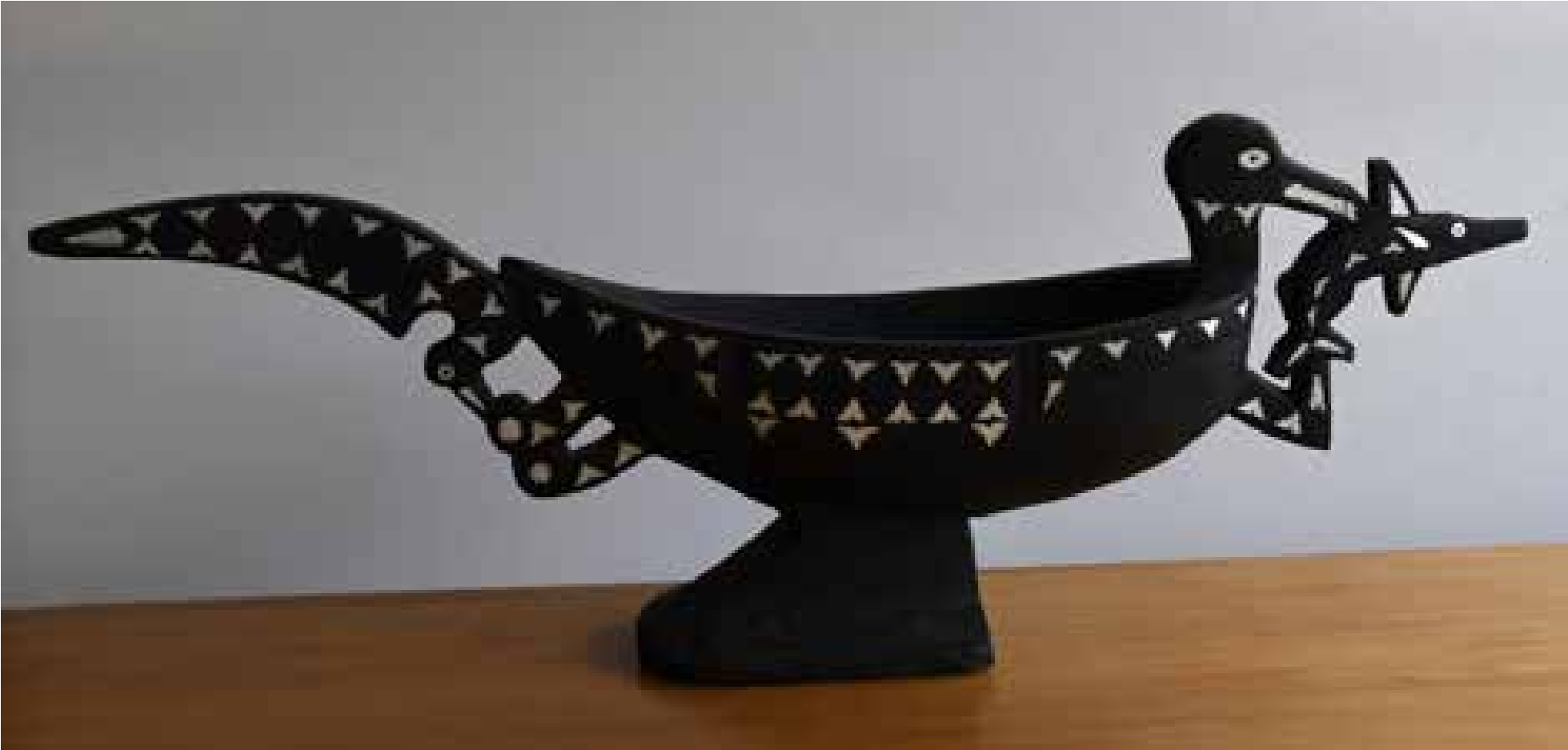
Figure 22. Frigatebird motif on a carved bowl, Marovo Lagoon, Solomon Islands. Photo: Chris Gaskin
Traditional stories
The SPREP Seabird Action Plan 2022-2026 recommends preserving and protecting the traditional knowledge and values associated with seabirds in stories, artwork, video, audio and publications.1 Here we present two examples of traditional stories relating to seabirds. In the first instance, avian behaviour in the Pacific Islands is commonly interpreted as augural with regard to weather changes. In Tonga, when the lofa talamatangi or frigate bird (Fregata spp.) is seen to be flying across the land—unusual behaviour for an ocean species—this is interpreted as a sign that a tropical cyclone is developing/approaching, a piece of traditional knowledge captured in the logo of the Tonga Meteorological Service. Similar birds in Fiji are considered manu-ni-cagi (“wind birds”) and are recognized throughout the archipelago. There are suggestions from local knowledge holders in the Pacific Islands that these documented uses of avian traditional knowledge represent only a fraction of what remains known and utilised in some communities, similar to those described below.12
A second example comes from a story told by villagers at Silur Bay, New Ireland, Papua New Guinea during interviews conducted during the Beck’s Petrel Expedition in 2017.13
This story was mentioned by two different interviewees and was as follows. “The Red-footed Booby is the ‘mother of all the seabirds’. She lays an egg, which breaks upon the stones. When it breaks, a Beck’s Petrel hatches out. The Beck’s Petrel then lays an egg and either a Black Noddy or a Sooty Tern hatches out.” The interviewees were not clear on whether or not the noddy or tern then hatches a Red-footed Booby to complete the cycle, although they thought it likely. This story may be a way of explaining the tight association of the different seabird species found feeding together around tuna schools. Local names for seabirds in Silur Bay, New Ireland: Red-footed Booby - ‘Ngok Lonbon’ or Hornbill of the Sea, Beck’s Petrel - ‘Pato Lonbon’ – Duck of the Sea, Black Noddy (Anous minutus) - ‘Manamus’, Sooty Tern - ‘Kanai’.

Fig 23. Identifying seabirds with villagers at Silur Bay, New Ireland, Papua New Guinea. Photo: Bill Morris.