
1.2 Why survey and monitor seabirds?
The first critical step for any new seabird project is to establish its purpose, which will allow you to create a clear and well-designed survey and/or monitoring programme. This involves setting out what you want to survey and monitor and why you want to do so. Identify the question or objective behind your project, such as “In ten years we want to know whether the population of X has increased due to management actions”. See Section 1.4 for the key steps in developing a survey and monitoring programme.
Seabirds breed on land and face numerous threats to their survival (see Section 1.6.1 for a detailed discussion). One of the most prevalent threats is introduced predators, as seabirds evolved without exposure to predatory mammals. The impact of introduced mammalian predators is a well-known and widespread issue facing a wide range of native species, and for seabirds are often the leading cause of their decline, and often even extirpation from islands. Many seabird conservation projects focus on predator eradication as a pivotal first step because with introduced predators such as rats, pigs, cats and mongooses eradicated, one can often see very quick results - seabirds can breed successfully, raising chicks that would otherwise have been eaten, and populations will naturally increase. There are many excellent examples across the world where the control of introduced predators is having a significant positive impact on seabird species. All these projects however should have one thing in common – that they have solid follow-up monitoring programmes in place, as without this you have no way of knowing whether your actions are having any impact at all or can alert you to the return of predators or some other negative influence.

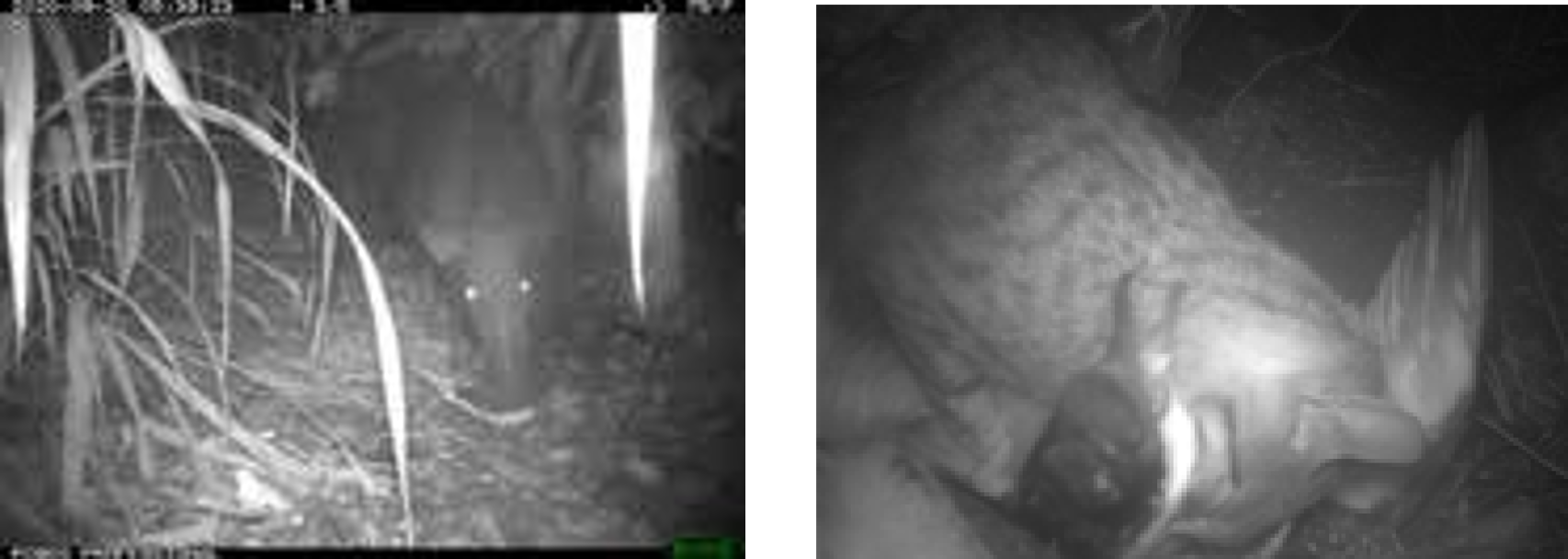
Figure 8. Examples of predation on seabirds. Left to right: rat, dog, mongoose (top), pig and cat (bottom). Photos supplied by Archipelago Research & Conservation and Hawaii DLNR
However, while controlling or eradicating introduced predators often results in a steady increase in the seabird population being managed, this is not always the case. This is because there may be multiple pressures on the population. Introduced plants could be making breeding areas uninhabitable by excluding seabirds from their nesting areas, birds may be colliding with powerlines or other human infrastructure on their flyway, fledglings may be grounded on their first flight out to sea by the lights of nearby towns, and diseases (such as avian pox or bird flu) may be sporadically wiping out sections of the population. A well-designed monitoring programme may also help to identify whether some other threat is impacting on the birds. You may find that by using burrow cameras, predators and predations are significantly decreased, but despite this burrows are being abandoned by adults, or chicks are not fledging despite regular visits by adults. This data is critical for drawing your attention to the fact that predators were not the only issue facing your birds and allow you to start investigating other potential issues. Is there something along the flyway that could be a problem? Are chicks starving, indicating threats at sea?
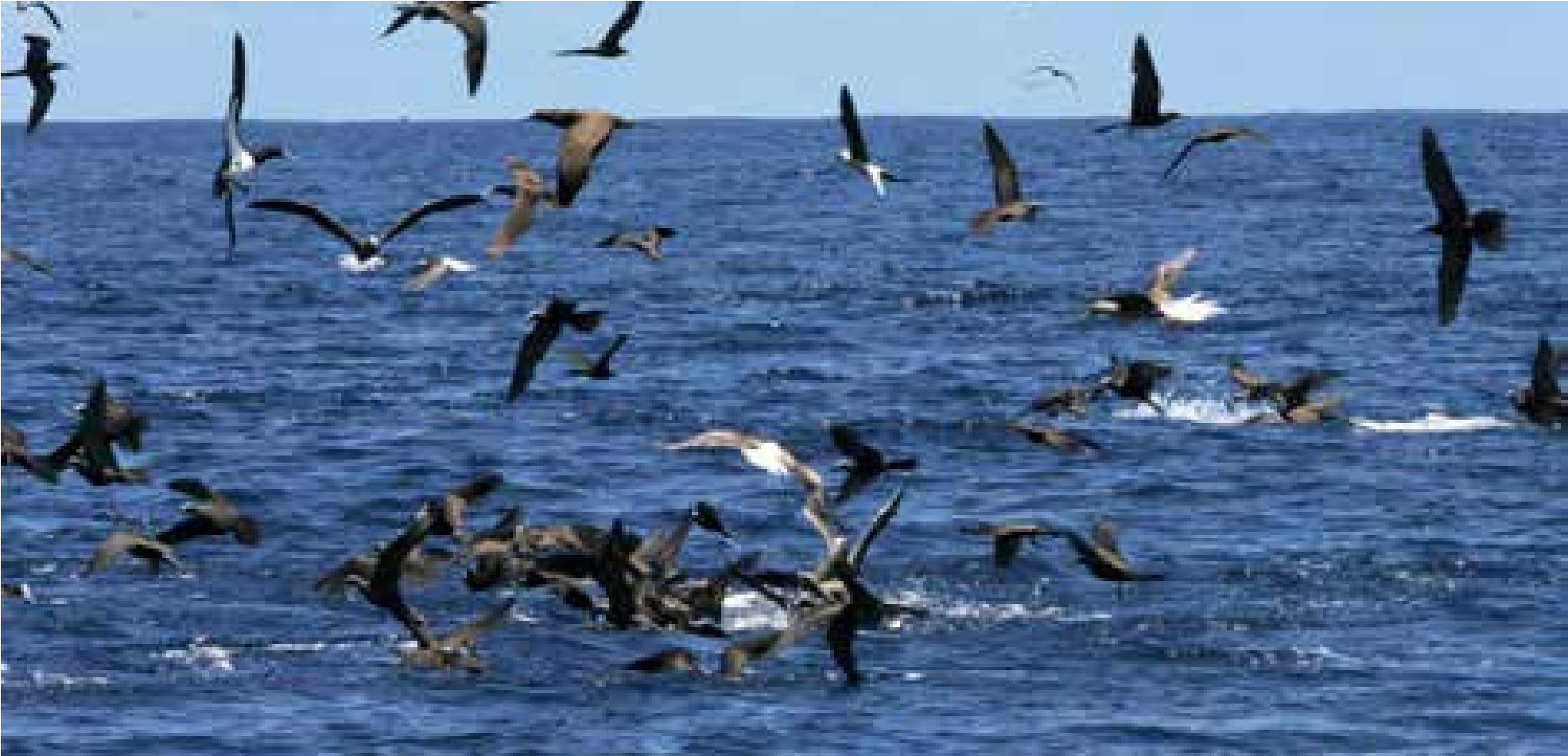
Figure 9. Foraging Brown and Red-footed Boobies, and Brown Noddies at sea, Samoa. Photo: Juney Ward, SPREP
By surveying and monitoring seabirds we can also learn a great deal about the marine environment: where they are foraging, what prey they are catching (both for themselves and their chicks) and how successful they are in raising chicks. We can look at the health of both parent birds and chicks and assess whether populations are increasing or decreasing. Through these collective studies we can learn a great deal, not only about the birds themselves, but about the marine environment on which they and the peoples of the Pacific depend.
The threats at sea for Pacific seabirds also need to be fully understood and assessed. There are a range of threats that face seabirds as they search for food in the marine environment (see Section 1.6.2). These include direct threats such as fisheries bycatch, plastics ingestion, pollution exposure, and indirect threats such as overfishing and the multiple impacts of climate change. Research into each of these can help in identifying improved management measures.
Returning to the question of invasive species, particularly introduced predators, it is important to note that the seabirds that breed across the Pacific are mostly remnants of former populations. Humans have had a huge impact, and species’ populations have declined dramatically over the millennia of human expansion across the Pacific. Unfortunately, this decline is continuing, often at an alarming rate. The complete extirpation of seabirds from many islands is highly likely without intervention. This is especially true for the Procellarid family of group of seabirds that include petrels and shearwaters, whose size ranges from the large albatrosses to the diminutive storm petrels. The smaller forms of Procellarids are burrow nesting species, and so are extraordinarily cryptic, and finding where they breed is not always easy. While some colonial-nesting species can be easy to detect (e.g., large ground nesting colonies of terns, noddies, albatrosses and boobies), many are in difficult to access places including offshore islands, scattered through forests, or high in remote mountains. It is remarkable in this day and age that new species are still being discovered, or those thought long lost and extinct are being rediscovered. Surveys are required to search for and find breeding sites, and once located only then can the threats to the birds’ survival be fully assessed, leading to planning and instigation of management measures.
Development of national action plans for seabird conservation and management may also be useful for providing long term goals for monitoring and protecting seabirds. The Pacific Islands Regional Marine Species Programme 2022-2026 contains the first Seabird Action Plan for the region and sets out a regional strategy for protecting seabirds. The Action Plan contains general information about seabirds in the region and objectives which may assist with establishing national priorities under the following regional goal “Conserve seabirds and their habitats, recognising the traditions and aspirations of the peoples of the Pacific Ocean and Islands”.