
3.12 Monitoring cyclone impacts
As we have seen, seabirds are integral to the health of islands and surrounding reef ecosystems (see Sections 1.3.1, 3.11). As ecosystem engineers, the removal of seabirds can lead to significant changes in island habitats and species complexes. The loss or major reduction in seabird colonies through significant storm events, could result in the alteration to ecosystem function or slow island recovery.
This is particularly true after severe or frequent storm events. Given the paucity of basic count and even life-history data for most seabird species across increasingly cyclone-prone tropical regions (thanks to climate change), careful monitoring of seabird demography and recruitment is required to better understand the capacity of these birds to adapt and recover from the rapid changes ahead.
Two major cyclones in recent years highlight the impact of such events on tropical seabirds, Cyclone Winston in Fiji (2016) and Cyclone Ilsa in Western Australia (2023). These affected seabird islands include Namenalala86 and Vatu-i-Ra (Fiji)87 and Bedout Island (Australia)88, all three are Key Biodiversity Area (KBA) sites.
Namenalala and Vatu-i-Ra are situated on either side of Bligh Water, the strait that separates Fiji’s two largest islands (Viti Levu and Vanua Levu). Both have volcanic origins and are surrounded by major reef systems. Prior to Cyclone Winston both were covered in forest, which was the main nesting habitat for several species. The cyclone radically transformed both, stripping much of the vegetation, particularly the large trees. This resulted in significant reductions in tree nesting species. For example, the Black Noddy population on Vatu-i-Ra plummeted, from more than 20,000 pairs to less than 1000 nests in 2021 (five years after the cyclone).
Following the cyclone, both islands have started to see vegetative recovery. While tree skeletons remain, the forests are slowly returning although the largely exposed open ground currently favours surface nesting species (i.e., Crested and Bridled Terns) at least in the short term.
Historical colony count data from Namenalala is patchy, making it difficult to chart the course of recovery of seabird populations (i.e., before and after the storm) on that island. Also, as with Vatu-i-Ra, any estimate of the actual numbers of seabirds lost is impossible without any immediate follow up with on the ground surveys. On a positive note, anecdotal evidence suggests Red-footed Boobies, Lesser Frigatebirds, and White-tailed Tropicbirds are returning to Namenalala and possibly also noddies and terns. Included in the plans for redevelopment of the resort, which was originally located on the island, most of the island’s area will be set aside as a bird sanctuary.89 Both of these examples show how severe storms can cause drastic changes in island seabird populations and also highlight the need for longterm monitoring plans - mapping the recovery of both of these island’s seabird population recovery would be an important consideration for future land managers.
The situation on Bedout Island, in the Indian Ocean off Western Australia in the first year following the cyclone was also dramatic. All vegetation was stripped off the coral island, and the formerly abundant seabird populations which when the storm hit were at the height of breeding and were almost totally devastated. The surveys found adult and chick carcasses, and abandoned eggs. It was estimated that 80–90% of the populations of three seabird species (Masked Booby, Brown Booby, and Lesser Frigatebird (Fregata ariel) were killed in the storm, with only 40 breeding Masked Booby recorded on the island 15 weeks later. Also, unlike many records of tropical cyclones elsewhere there was minimal evidence that adult seabirds fled Bedout Island prior to Cyclone Ilsa’s arrival. While some birds may have been at-sea during the surveys, or otherwise absent due to the damage to Bedout Island, the numbers of seabirds appear substantially reduced.88
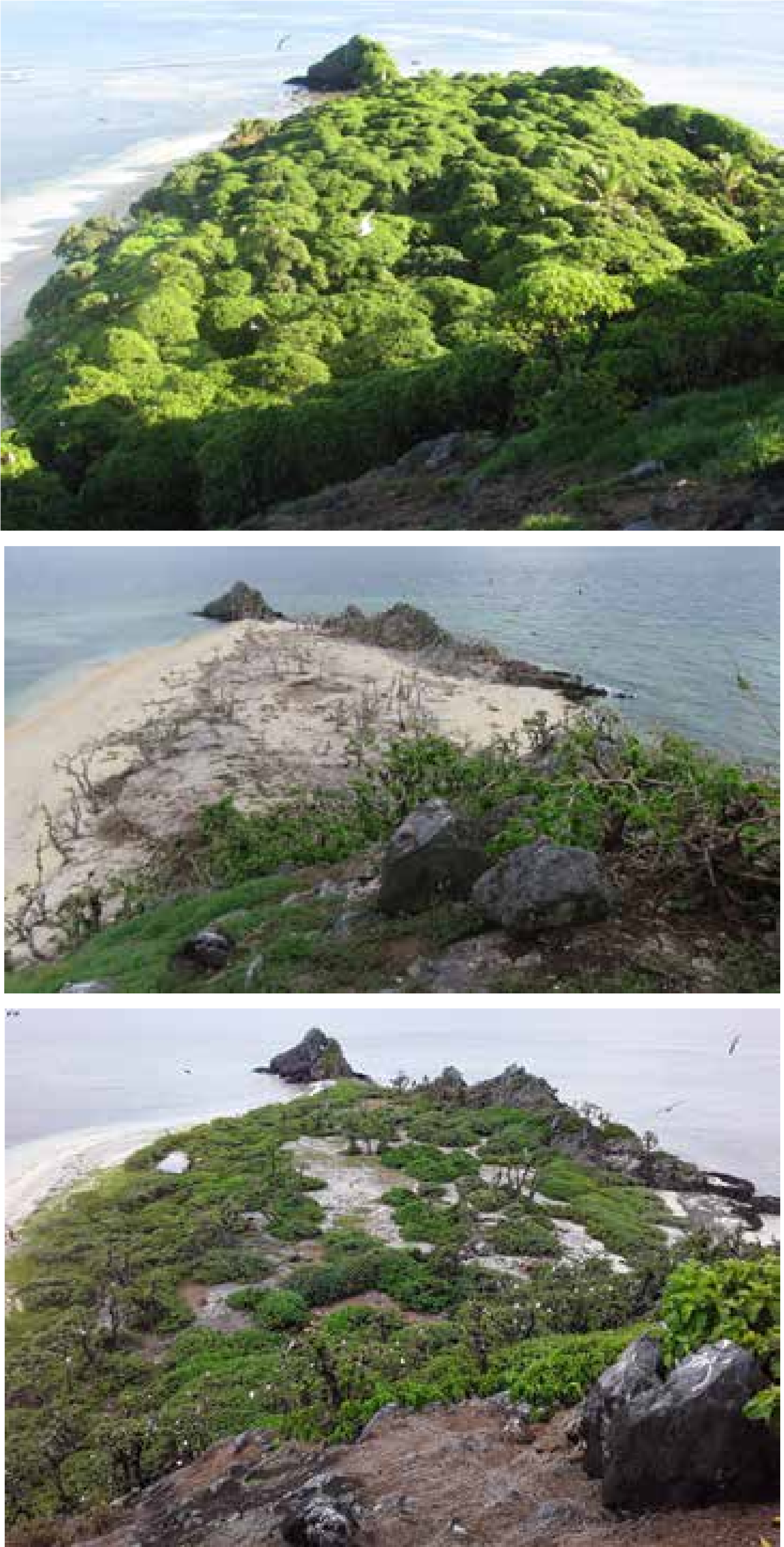
Figures 122-124. Before and after photos for Vatu-i-Ra. Photos: BirdLife Pacific.
Survey methods adopted post-cyclone
Vatu-i-Ra: The island was visited one month after Cyclone Winston struck, with follow up visits in three and eight years later with teams camped on the island.90
Namenalala: Limited surveys had been conducted prior to Cyclone Winston, and no monitoring following.
Bedout Island: Three surveys of Bedout Island were completed following Cyclone Ilsa. The first survey was completed four days after the storm passed. A helicopter flew over the island (permission to land was requested, but not approved); it spent approximately 20 min generating aerial imagery. A second, ground-based survey was undertaken ten weeks after Cyclone Ilsa. The island was accessed by boat, and a single person spent 2 h on shore. Deceased seabirds were counted and identified to species level within five transects (60 × 2 m) placed haphazardly across the island with an aim to cover as much of the central seabird breeding habitat as possible. As this survey was limited in duration, a third and final assessment of seabird mortality was completed one month later to provide additional transect data, including from parts of the island not covered in June. During this final survey, the island was accessed by helicopter and a further 10 transects (60 × 2 m) were completed over four hours using a similar approach.88