
2.1.12 Case study - Use of VHF telemetry to discover breeding sites of New Zealand Storm petrel
There are several species in the Pacific whose breeding sites are unknown (Fiji and Beck’s Petrels, Heinroth’s Shearwater, and New Caledonian Storm-petrel), although sightings at sea give hints to where they could be breeding.
The New Zealand Storm-petrel was thought to be extinct (known only from three museum specimens collected in the 19th century), until one was photographed at sea in northern Aotearoa New Zealand in 2003.37 More sightings followed. Confirmation that the birds being seen at sea were the same species as existing museum specimens required birds to be captured at sea to allow for blood and feather samples to be collected, followed by genetic analysis.38
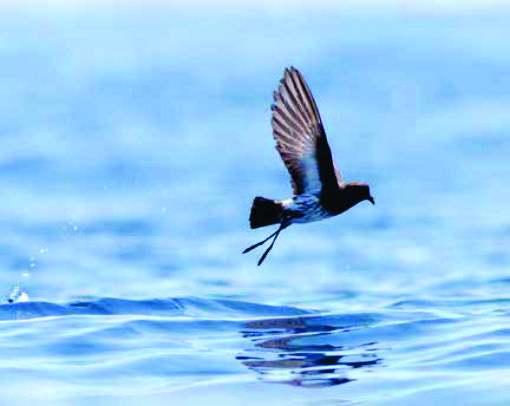
Figure 60. New Zealand Storm-petrel. Photo: Edin Whitehead.
While species confirmation was subsequently achieved, it was another ten years before their breeding grounds were located. The first step was to obtain an understanding of breeding phenology, particularly understanding when the birds would be laying and incubating eggs and raising chicks. This was achieved in 2012 by capturing birds at sea across several months and checking brood patches (see Section 3.4). By the end of that study, it was clear their breeding timing was much later than originally thought, with laying likely through February.39 This meant tracking the birds would be best undertaken from the end of January and into
February. The capture trips also allowed for at sea observations close to islands to try and detect storm-petrels flying towards shore late in the day, at dusk and then using spotlights at night. Repeated sightings narrowed down potential search areas around one large island, Te Hauturu-o-Toi (Little Barrier Island). These observations were also used to work out where best to locate remote telemetry stations and plan for a major island- and boat-based telemetry operation.40
The following season in 2013, 24 New Zealand Storm-petrels were captured at sea and fitted with miniature coded VHF radio tags. The remote telemetry stations had been set up on two headlands and after eight days the first of the captured birds was detected at night at one of the stations. In the following twelve nights, eleven of the 24 captured birds fitted with transmitters were detected at the remote stations. At the same time ground and boat-based parties using hand-held antennae were deployed and birds were detected over the island, from shore to the summits (650m asl). Unlike the remote stations, the hand-held receivers were unable to identify individual birds, however, that was secondary to finding birds on the ground or in burrows. Eventually two birds were tracked by ground parties to burrows in the forest using telemetry. One more burrow was found when a ground party saw a bird disappearing into a crevice close to one of the first burrows, and two more were found using a dog trained to seek out petrels later that season.41
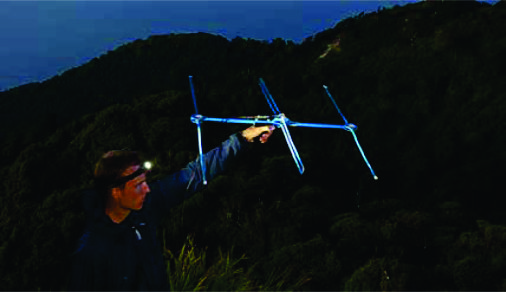
Figure 61. Radio tracking on the summit of Hauturu. New Zealand Storm-petrel were detected at sea,
and also flying over the summit peaks. Photo: Arno Gasteiger, NZ Geographic.
While radiotelemetry was effective in enabling discovery of New Zealand Storm-petrel breeding sites, it also provided the first data on the species’ breeding biology without major intervention in the fragile breeding habitat and at a time of year when storm-petrels can be sensitive to disturbance. This was achieved by using a remote VHF receiver set up close to the first occupied nest site found, logging visitation by the tagged bird over several weeks.41
In the ten years since 2013, over 500 New Zealand Storm-petrels have been captured on the island, and a mark recapture study has provided a population estimate.42 Their calls have been recorded and used in a social attraction experiment to set up an artificial colony. While the latter has not been successful to date, their overall population appears to be steadily increasing.43 A genomics study was conducted in 2021, comparing the DNA of birds from locations at sea up to 250 kilometres from the island and the Hauraki Gulf, confirming that Hauturu remains the only likely breeding site.44
Hauturu was declared predator-free in 2004, after first cats and then rats were eradicated. Released from predation-pressure, the storm-petrel’s population appears to be increasing. In this case, the survival of a presumed extinct species can be considered an unintended benefit of the coincidental protection of its breeding habitat, knowledge of which was made possible by using the very small 0.67g VHF tags and a major field tracking effort.