
2.1.1 Historical data
Another initial first step for obtaining information about the distribution of seabird breeding sites is to review historical records. Have there been any previous surveys for the species? If so, are there any reports or relevant publications that you could obtain? Historical data helps to focus surveys, as well as providing a potential baseline for your surveys.
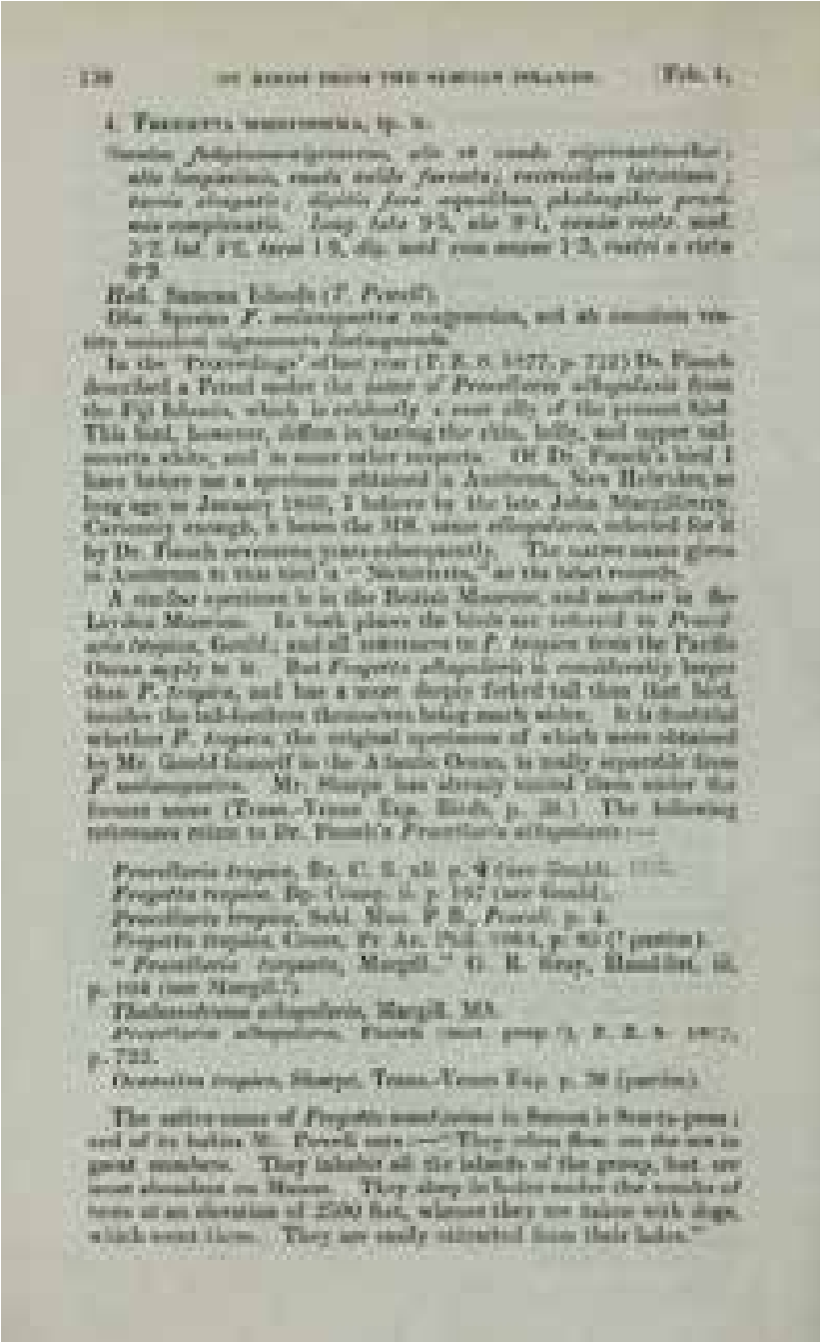
Fig 29. Original description (above)19 and specimen (below) of the dark-morph Polynesian Storm-petrel, Manua Islands, American Samoa. Photo: British Natural History Museum.

Additionally, contemporary observations are also extremely helpful – apps such as eBird provide a way of reviewing current records of the species to help guide your surveys, as well as contacting local NGOs or birding groups. Once you have done your review of previously available data, it is time to consider undertaking your own surveys.
The Pacific Seabird Colony Database (see Section 4.2) holds colony count data, all of which are referenced to papers and reports, a lot of them are pre-twentieth century. The database would be a key resource for any proposed survey.