
2.1.4 Case study - Conservation challenges of monitoring seabird collisions with human infrastructure
Marc Travers, Archipelago Research and Conservation
In the early 1990’s, research confirmed that an endangered endemic seabird - the ‘a’o (Newell’s Shearwater) - collided with powerlines on the island of Kaua’i, Hawaii.21,22 In these studies, the detection of grounded birds under powerlines was used to confirm powerline collisions. However, they did not reveal the true scale of the problem, nor did they detect any grounded ‘ua’u (Hawaiian Petrel) under powerlines, despite ‘ua’u having similar overall collision risk factors.
Population trend monitoring indicated that from the early 1990’s to 2010 Kaua’i lost 78% and 94% of the ‘ua’u and ‘a’o respectively.23 In 2011, renewed interest in understanding the impacts of powerline collisions on endemic seabirds resulted in the initiation of a powerline monitoring program with the goal of developing novel techniques to better estimate collisions at the landscape scale. The result of this effort was the development of the acoustic collision monitoring system, where the sound produced when birds collide with powerlines is recorded by autonomous recording devices.24
This novel technique involves deploying acoustic sensors at the base of power poles with the sensors programmed to record during the diel and seasonal movement periods of the target species. For the seabirds on Kaua’i, sampling occurs between sunset and sunrise from March to December. The acoustic files are then downloaded and analysed by a computer using machine learning to detect the signature sounds produced when a bird hits a powerline. The strength of this technique is the large geographic and temporal scale at which powerlines can be monitored. On Kaua’i, there are 205 km of powerlines that require collision estimates. The acoustic method facilitates extensive monitoring across the geographic expanse of these powerlines, which in turn provides a rapid indication of seabird collision hotspots across the island.
The acoustic data is also used to develop landscape scales collision estimates for endangered seabirds, which indicate that the true scale of seabirds being grounded by powerline collisions numbered in the thousands each year between 2012-2020.25 The acoustic grounding estimate was orders of magnitude larger than those estimated in the 1990’s. Of great conservation concern is how the initial estimate from the 1990’s undercounted the problem to such an extent.
The reason for this is that initial estimates were based on grounded bird detections, which suffer from significant crippling and environmental bias.26 These biases were evaluated on Kaua’i from 2012-2020 through observations of bird movement at powerlines that were conducted in conjunction with the acoustic collision monitoring. The observations quantified the species-specific movement, timing, flight height and post collision outcomes. Firstly, these data facilitated assigning acoustic collisions sounds proportionally to the species observed hitting powerlines. Secondly, observations of collisions were used to determine acoustic collision detection rates (i.e., site specific performance of the acoustic collision monitoring system). Thirdly, it was observed that most birds were not grounded directly under powerlines but were instead grounded outside of the standardized search spaces (crippling bias) or in habitats that cannot be searched (environmental bias). On average, birds were found grounded 146 meters from powerlines and confirmed grounded up to 1,100 meters away - far outside the boundaries of any standardized search transects.27
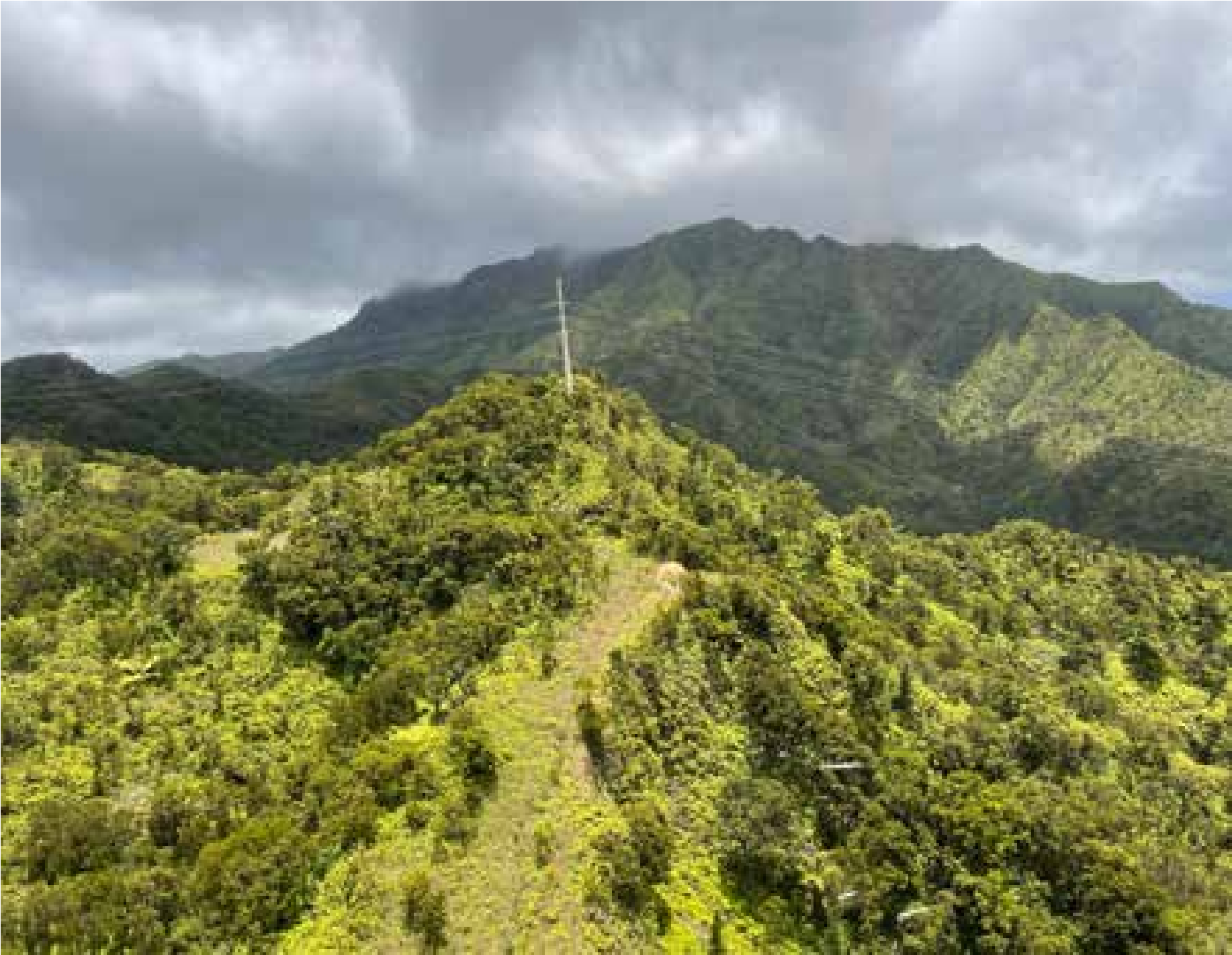
Figure 36. Powerline collision area, Kaua’i, Hawaii. Photo: André Raine.
Additionally, the highest collision rates occurred in either steep mountain terrain which was unsafe to search or over vegetation too thick to search, making it impossible for search studies to accurately quantify these collisions.26 Lastly, misidentification of the cause of grounding also resulted in undercounting powerline collisions. For example, some birds that hit powerlines were grounded in roadways and were then secondarily hit by cars. The obvious signs of car collision resulted in misidentification of the primary grounding cause (assigned to vehicular collision instead of powerline collision) and significant undercounting of powerline collision for endemic waterbirds on Kaua’i in particular.27
Underestimating powerline collisions on Kaua’i delayed conservation actions for nearly three decades and was a significant contributor to the massive population declines.26 Acoustic monitoring paired with observations provided robust data that was required to initiate large scale conservation actions. These data subsequently led to the modification by the power company on Kaua’i of 94% of the powerlines for the protection of birds.28 A combination of four powerline modification strategies were implemented to match the environmental and species-specific risk factors29 and have since resulted in a significant decrease in collisions – representing a huge win for seabird conservation on the island. The strategies used to modify powerlines on Kaua’i would represent a good baseline guide to considered elsewhere, when modifying powerlines or any other type of aerial line, such as guy wires on communication towers (see the following reference for details).30